Wednesday, 20 April 2011

The Ian Potter Museum, Melbourne.

For my Historicising the Colonial Past class today we visited two exhibitions at the Potter Museum. "Trademarks"; a display of the indigenous items collected by Leonhard Adams and "Experimental Gentlemen" chronicling the changing vision and understanding of Australia.
Both exhibits were very impressive collections, particularly "Trademarks" which had a vast collection of Native and South American pieces. However, the talk that accompanied this part of our tour was rather conflicting. In taking these items out of the archives the curator had decided to trace their origins, contacting the museums to find out how Leonhard Adams had got a hold of them in the first place and where they were from. It was revealed that Adams had actually traded many Aboriginal artifacts in return for the artifacts in his collection. The curator then went on to tell us that although she had found the museums where the pieces had been traded or obtained it was not her "priority" to find out who they originally belonged to. It seems quite contradictory to ascertain which museums worldwide these pieces were sourced from without wanting to find out to which tribe, culture or group they belonged. She then went on to inform us on how much the pieces were worth and the standing that they had created for the museum. That's all well and good, but surely the people to which these pieces belong to, these cultural and socially significant pieces of which they may be the only ones in existence, have the right to know where their ancestral artifacts are residing? It seemed particularly condescending that the one tribe she had managed to allocate a shield to, when they visited it and critiqued it for not being the best they had ever heard of, she then produced her texts books and history books to show the tribe to which the shield in question belonged were actually wrong in her opinion. If anything, this shows the contrast between written history and oral history. This tribe stated that they had heard of tales in their past of greater, better and more artistic works, something to which the written, colonial history cannot back up so instead it takes this condescendingly defensive stance, telling the culture they are wrong because they do not have written, identifiable proof. It seemed that for a museum that originally came across as very open and understanding is just as unreceptive towards the idea of acknowledging the true owners and potential repatriation of museum items.
Another disturbing factor was the mention of the artifacts that had been traded out of Australia. There was no mention of trying to get those back or contacting remaining members of Aboriginal tribes in order to tell them where their cultural, historical and social artifacts are. I realise that money, time and effort are big questions in relation to this, but if there are records of how the value of their items has increased over the years, surely there must be one with what pieces went where and what group they may have originally belonged to.

The "Experimental Gentlemen" exhibit was very interesting, it charted the representation of indigenous cultures through books, paintings and etchings from those first settlers in Australia. It was very interesting to note that where the early settlers had, in very detailed ways, depicted Aborigines and their culture, but by the 1880s this had stopped. The reason behind this was that this representation had become undesirable to the colonisers who wanted to draw more people to Australia. It effectively creating an invisibility that some will argue is still continuing today.


"Panoramic View of King George's Sound, part of the Colony of South River" (above- detail) by Robert Havell and Robert Dale in 1834 was one of the major pieces of the exhibit. It was interesting that the detail shown here of the amicable looking hand shake is contrasted by a descriptive booklet that came connected to the image. This booklet charted the tracking down, decapitation and transportation of the head of the indigenous leader, Yagan, back to England with Robert Dale. An image of the decapitated head was inserted as the front-piece of the pamphlet. This certainly went against the Australia Britain was trying to project in an attempt to tempt new settlers. As a result this was one of the last images presenting Aborigines.
Interestingly, Yagan's skull was repatriated to representatives of the Noongar tribe on the 31st August 1997 in Liverpool. He wasn't buried in Australia until 10th July 2010 due to disagreements over his remains. This idea of museum repatriation links back to the first exhibit "Trademarks" and whether the tribes to which those pieces belong should be contacted and whether they have the right to take their pieces out of museums should they want to. I think it's something that's going to become more debated over the next few years, especially now that the British Museum has started repatriating items under the Human Tissue Act in the UK.

Saturday, 2 April 2011

Pictures

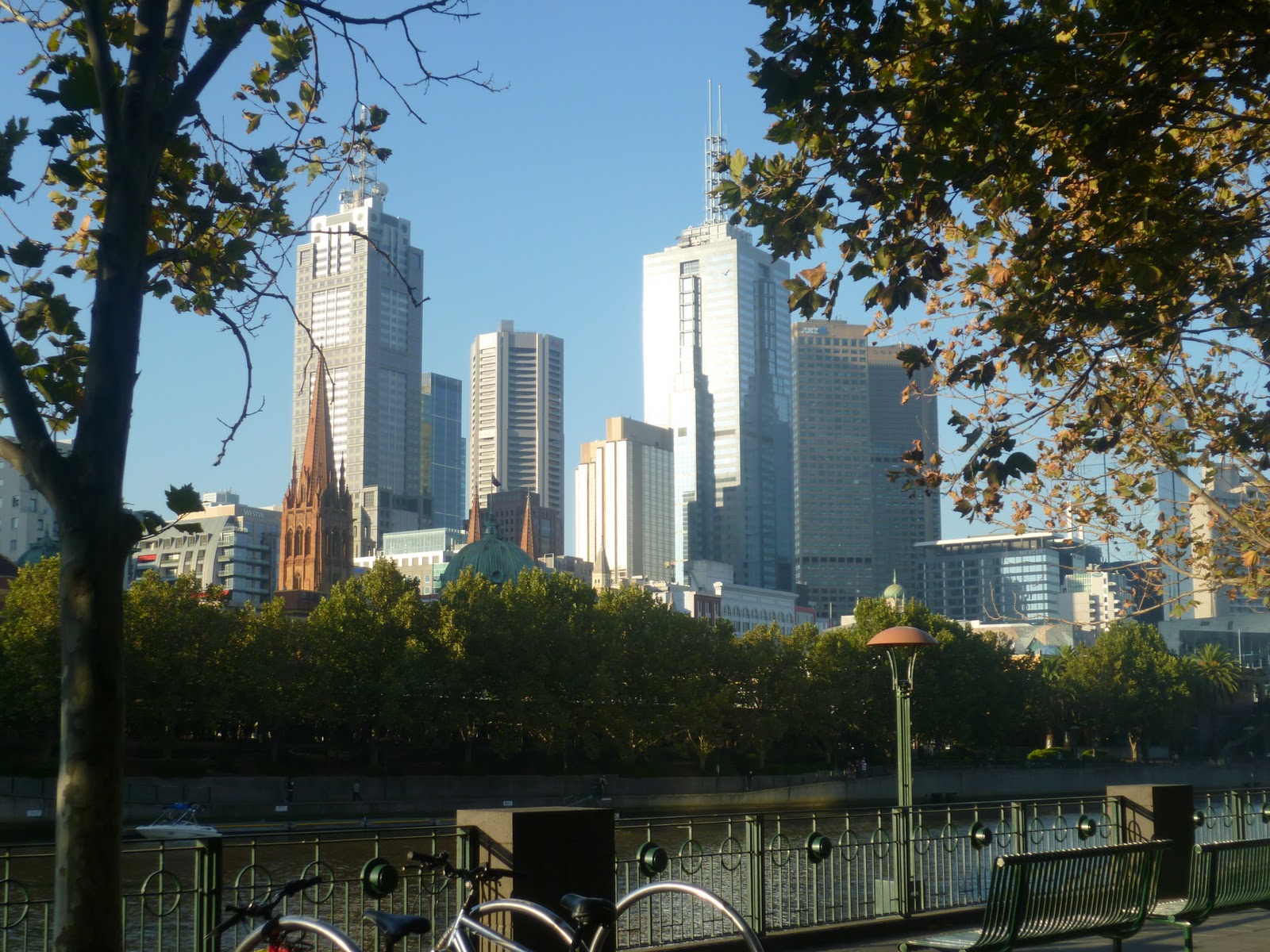
Here are some pictures I snapped the other weekend, and I struck it lucky with the weather, which is a bit hit and miss here.


Makes a change from England! 

Friday, 1 April 2011

A new April resolution...

From today I am starting the applications for work experience placements at various publishers in both the UK and Australia. 
I can pretty much guess that I am not going to get anything in Australia, not because of visa status or anything like that. Mainly because over here all work experience and two week internships are done when students are ideally in year 13- 15 to 16 year olds. I only decided that I would like to get into publishing, specifically production, about a year and a half ago. Over here there seem to be a lot less students that I have discovered who don't have a plan. Even if it's just to go onto a masters, or another course, it's still a plan. I think perhaps the monetary cost of universities over here, and in America, means that most students don't seem to go unless they have a clear idea of what they are going to do with a degree. In the UK it seems more people go to university at the moment because there is nothing else on offer. In Australian terms I am exceedingly slow off the mark, not only not having done any seriously future applicable work experience/internships, but also to not specifically decided on career options which has resulted in me being given a lot of strange looks. 
Personally I don't feel that there is anything wrong with not knowing your future career. I know ideally in 20 years where I would like to be, but if I don't get there then I'm confident I will have found a different direction/employment that is just as suited. Or, perhaps it's just my loathing to make decisions. The last few months, what with picking my final year UEA modules, forming dissertation proposals and actually having to think about life post-uni I am becoming more and more stubborn when it comes to making potential permanent future decisions. Everyone I know who has finished uni/is finishing this year hates it, they are telling me awful stories of unemployment, dole, indecision and generally warning me against the impending doom that is the end of university. Surely it can't be that bad? 
As a naive first year I vowed never to leave uni, to stay in education as long as physically possible. However, it's come to the point now, that no matter how much I love education, and I'm not going to lie I am a geek and I love learning, I need to get away from university. Even if it is just to unemployment (which is looking the most likely option with the state of the UK at the moment). 
So, with the purposeful launch of work experience and internship applications I am making one of the first delves into a post-uni world. Perhaps it will be my belated New Year's resolution. A new April resolution? 

National Poetry Month

Seeing as today is the start of National Poetry Month I thought I would give you one of my favourite poems, written by Ben Johnson after the death of his son.

On My First Sonne.

Farewell, thou child of my right hand, and joy;
My sinne was too much hope of thee, lov'd boy;
Seven yeeres tho' wert lent to me, and I thee pay,
Exacted by thy fate, on the just day.
O, could I loose all father, now. For why
Will man lament the state he should envie?
To have so soon scap'd worlds of fleshes rage,
And, if no other miserie, yet age?
Rest in soft peace, and, ask'd, say here doth lye
Ben. Johnson his best piece of poetrie.
For whose sake, hence-forth, all his vowes be such,
As what he loves may never like too much.

Friday, 25 March 2011

Waterstone's

Today brought the unsurprising news that Waterstone's is up for sale by HMV. Apparently they plan to use the money from the sale to reduce their debt and create a "turnaround plan" for the music stores. If I'm honest I don't think it will matter what or who you sell, sadly HMV is on it's way out as a result of online buying and in store competition. Being forced by the banks to sell in order to pay off debts, HMV seems to be on an ever increasing downward spiral.
Valued at £50m to £70m Waterstone's faces an interesting future. When Borders UK first came up for sale in 2007 it was sole for a mere £20m and struggled in a "declining market", eventually going under. So who knows what's going to happen to Waterstone's. Rumours of Dominic Myers creating a management buyout are rife at the moment, and no doubt Tim Waterstone will try and form some sort of buyout. Personally I love Waterstone's, having worked there on and off for years it's sad to watch it's slow decline. From the closing down of twenty stores to it's sale, hopefully someone will but it out and change it around, however I think they are facing a difficult and rapidly changing market. Whoever buys it needs to realise the potential and instead of wasting time bringing in new agendas, new stock such as DVDs (only to return them six months later because they weren't selling) and overpriced children's toys, they need to focus on what they are about and that is books. They will be taking over a range of staff, the majority of which know their stuff inside and out, and need to realise this potential. Waterstone's needs an ownership that will support staff, accentuate their knowledge and give them credit for it, instead of treating them like imbeciles.
Personally, I don't think that the current management will particularly do that, from my experience of them they seem to struggle to organise the next weeks offers and POS. However, when it's your own company as opposed to someone else's the urge to make in run smoothly, reduce waste and increase profit is probably a lot higher.
I will be reading The Bookseller avidly, waiting for the next installment.

Tuesday, 15 March 2011

Poetry.

I will have been here exactly a month tonight and I think I can safely say that I am completely settled in now. Well, I still get lost on campus, but it has its own postcode so it’s pretty huge. I think that’s allowed.
One thing I am surprised with is how much I am enjoying the creative writing class that I was dreading. It’s one of my favourites now. I don’t know if it’s because the tutor is really excited about anything you produce and really encouraging, because it’s a good group of classmates. I don’t know. I am still dreading workshopping however. I realise its constructive criticism and all but it still feels a bit mean analysing someone’s first draft in such a critical way.
One thing I have been musing on is whether or not I want to put the poems I am working on on here as a way of slowly getting myself into workshopping. However, the thought of releasing those few things I have written onto the World Wide Web is not really appealing. Also I don’t want this blog to turn into some kind of precocious poetry collection, or to become yet another “poet” releasing their stuff on the internet in the hope that they might get a fan base. It’s a bit too personal for that. So on one hand I have the thought that it might do me good and if I get criticism it’s not like I know the person if they’ve commented on here and criticism, bad or good, is always interesting to hear. On the other hand however, it’s a big step and seeing as I have trouble reading my pieces to the class I don’t know if I’m up to putting them on here. I would be grateful for any thoughts?
Maybe I should just put them on here after they’ve been marked and I’ve obviously got full marks and multiple commendations!

Wednesday, 2 March 2011

First Week.

Just finished my first week of studies at Melbourne Uni (and yes, I am only on campus three days a week). The only problem now is that I have a little dilemma in that I am enrolled in six subjects, but can only take four. I know I am definitely sticking with the Art/Pornography/Blasphemy/Propaganda class. It's brilliant, studying a range of banned and controversial books along with films and artworks, and throughout this asking the all important question "what is art?" to try and form some sort of definition on what should and should not be censored. After our first tutorial there were already enough arguments to see this class is going to be fun! As for my Creative Writing requirement I attended both the Novels class I was originally enrolled into and a new one called Poetry and Poetics. Although both were good classes, the Poetry one seemed far more accessible, and the Novels tutor put me off when he opened with a gigantic list of things he did not like to read about/irritated him. Now, I realise that everyone has likes and dislikes, but in a university class that's meant to make you write creatively, surely you can't dictate what you do and do not like in order to sway our writing? So, I think that will be one of the classes I will be dropping.
As for the historical side that I've tried to incorporate I attended both Colonising History and Historicising the Colonial Past. Both sound pretty identical right? That's what I thought, but apparently not. Colonising History is a broad look at the entire history of Australia and it's colonisation, the effects on it's citizens up to the modern day. Historicising the Colonial Past is directly studying the Indigenous People of Australia and looking at how colonisation has affected them. It's also using both a historical approach and a fictional one, which should be interesting in terms of the oral traditions in the culture and what it means to have their traditional stories written down for outsiders to read. This class is probably going to be what I am going to take, purely because it covers specifically what I want to look at for my dissertation.
My final class is a comparison of Australia and America. I think this class is going to be the most controversial for me purely because in the first lecture the teacher was both useless and came out with some of the most outlandish generalisations I have heard in a long time. From her inability to work out how to plug in a USB to her statements on how "America is qualified by a dream, that means Australia is the nightmare" without anything to back this up I think it's going to be interesting seeing what she comes up with next.
I also had an interesting meeting with the head lecturer of the postgraduate Publishing courses. This was because I had asked whether there was any chance I could take one. One of the convenient factors of being an international student is that most of the uni's are eager to please you, perhaps more eager than your home uni, purely because you are going to be taking their name back to your home uni and telling people whether or not to go there. As a result this meant in America I got to take a graduate class and I figured it was worth a try whilst I was over here. Sadly, it didn't work, but what you don't ask you don't know and I got to have a brilliant meeting with Bryony who told me all about the Australian publishing market, the job buoyancy as a whole, ebooks and ereaders, book prices and basically similarities and differences between the UK and Australia. She also invited me to a series of guest lectures from various heads of different publishers over here, which is only meant to be open to postgrad students so I'm really chuffed with that. So even though I didn't get the class I wanted I still got to meet a very interesting lady who was kind enough to help me out and encourage what I was doing so far. Can't complain at that!
For a first week I think it was one of the more stressful ones, the campus is a lot bigger than expected and going to six classes certainly takes up a lot of your time, but I am settling in a lot more and am starting to really enjoy my time here, even if I am now going to become a poet as opposed to a bestselling novelist!